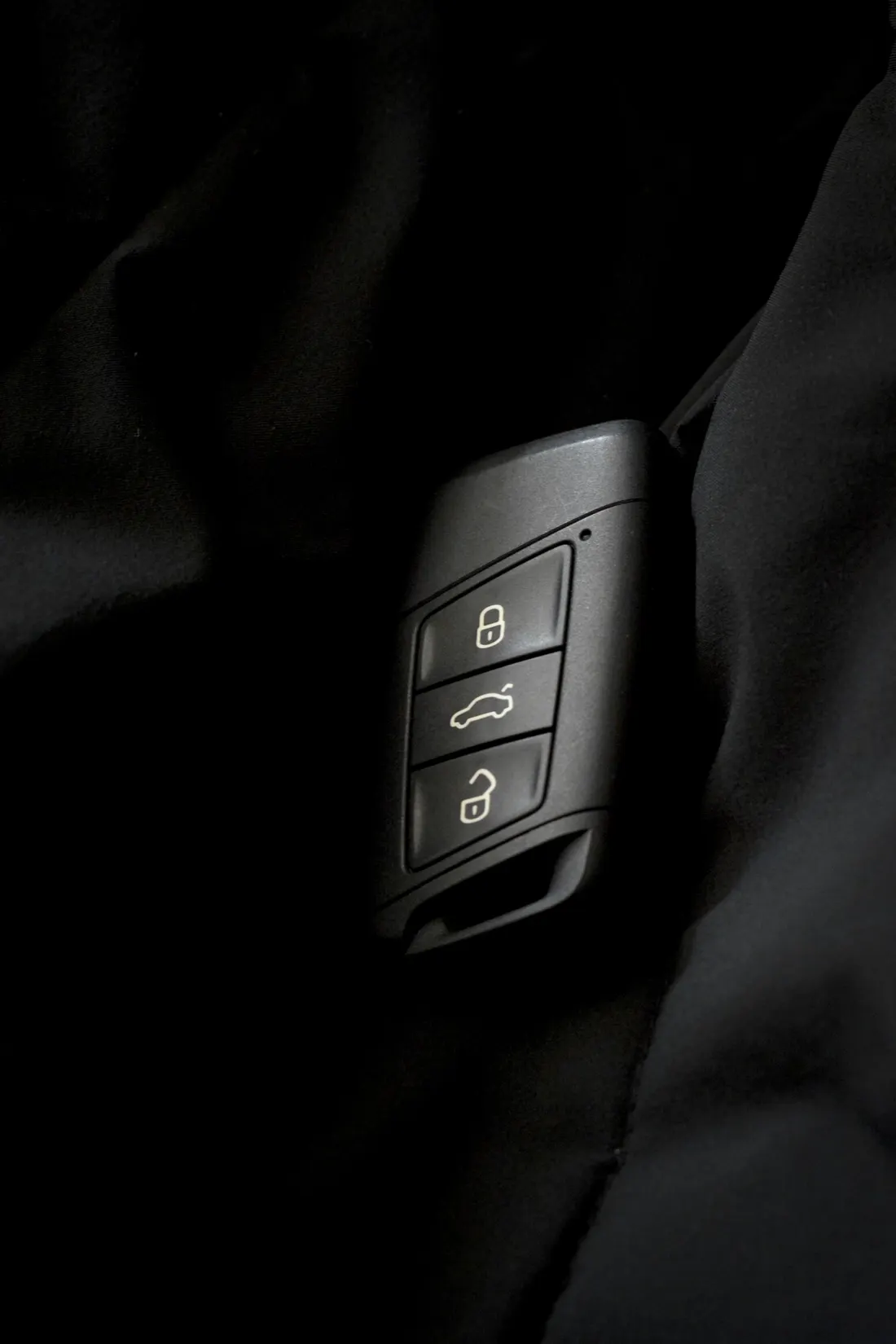
Car key fob
Is it the battery or a dead fob?
How to tell a weak coin-cell battery from a worn-out car remote, which sizes are common, and when home programming still works.
Most remotes fail in a boring way: the battery is low. A smaller number have a worn button pad, a cracked case, or electronics that no longer talk to the car. Work through the cheap checks first.
What a weak battery usually looks like
- You have to stand closer to the car than you used to.
- The lock or unlock button needs two or three presses.
- The remote works only after you hold it against the door handle or the start button.
- The buttons still have a clear click. The plastic is not broken or swollen.
If the same car still unlocks with a second remote, the car’s receiver is probably fine. Focus on this fob.
Common battery sizes
Look at the face of the old cell. The size is printed on it.
| Marking | Typical use |
|---|---|
| CR2032 | Many flip keys and older remotes |
| CR2025 | Thinner tray in some remotes |
| CR1632 | Smaller compact remotes |
| A27 or a tiny AAA | A few older fobs |
Match the size exactly. A CR2025 is thinner than a CR2032 and can sit loose or fail to touch the contacts. Note which side is marked + before you lift the cell. In most trays the plus side faces the metal clip.
Use a plastic pry tool or a fingernail in the factory slot. Some cases have one small screw. Take a phone photo of the board before you remove anything so the new cell goes back the same way.
After a swap, wait a minute and try the buttons from a few steps away. Some remotes need that short wake-up.
When the fob itself is likely worn out
A new battery does not fix every remote.
- The buttons feel mushy or do nothing after a confirmed fresh cell.
- The case was cracked, left in a wet pocket, or washed with laundry.
- The circuit board flexes when you press a button.
- You already replaced the cell once in the last few months and the same symptoms returned quickly (corrosion on the contacts is a clue).
At that point you are shopping for a replacement remote, not another coin cell.
When home programming still works
Many cars from the 1990s through about the mid-2000s let you add a remote from the driver’s seat. The usual pattern is:
- Sit in the car with all doors closed and a working key.
- Follow the owner’s manual sequence (often several ignition on/off cycles).
- Press lock on the new remote within a short time window.
- Turn the ignition off to store the result.
That sequence programs door lock signals. It does not clone a modern immobilizer chip.
Home programming is a poor fit when:
- The car uses a push-button start or a smart key that stays in your bag.
- The manual says a scan tool is required.
- You have no working key and the car will not enter a program mode.
- You bought a very cheap unbranded shell that never paired on this make.
Those newer keys are paired to the car’s security module. A locksmith with the right diagnostic tool, or the dealer, has to do that pairing. There is no honest household shortcut.
Locksmith or dealer
Mobile locksmith: useful for many older remotes, spare keys that still use a simple chip, and getting you moving when the dealer is closed. Ask whether the quote is for a battery, a programmed remote, or a cut metal key. Those are different jobs.
Dealer: the safer path for late-model smart keys, cars still under a factory warranty plan that covers keys, and keys that must be ordered to the VIN.
Do not pay for a full programmed key if a $5 coin cell and ten minutes would have solved it. Do not expect a store-shelf “universal” fob to start a late-model car just because the buttons click.
Honest limits
- A working metal key that turns the cylinder can still leave you unable to start a car that expects a paired transponder.
- Aftermarket remotes vary. Some only work the locks. Some never pair.
- If you have one remaining key, store it safely before you experiment. Losing the last paired key turns a simple job into a dealer visit.
Coraco Studio will add make-and-year pages over time. Until then, the owner’s manual section titled “remote” or “transmitter” is the check for whether your car still allows the ignition sequence.
See the car key fob hub for more pages as they are added. Other Coraco Studio topics: printer ink numbers and dryer vents.