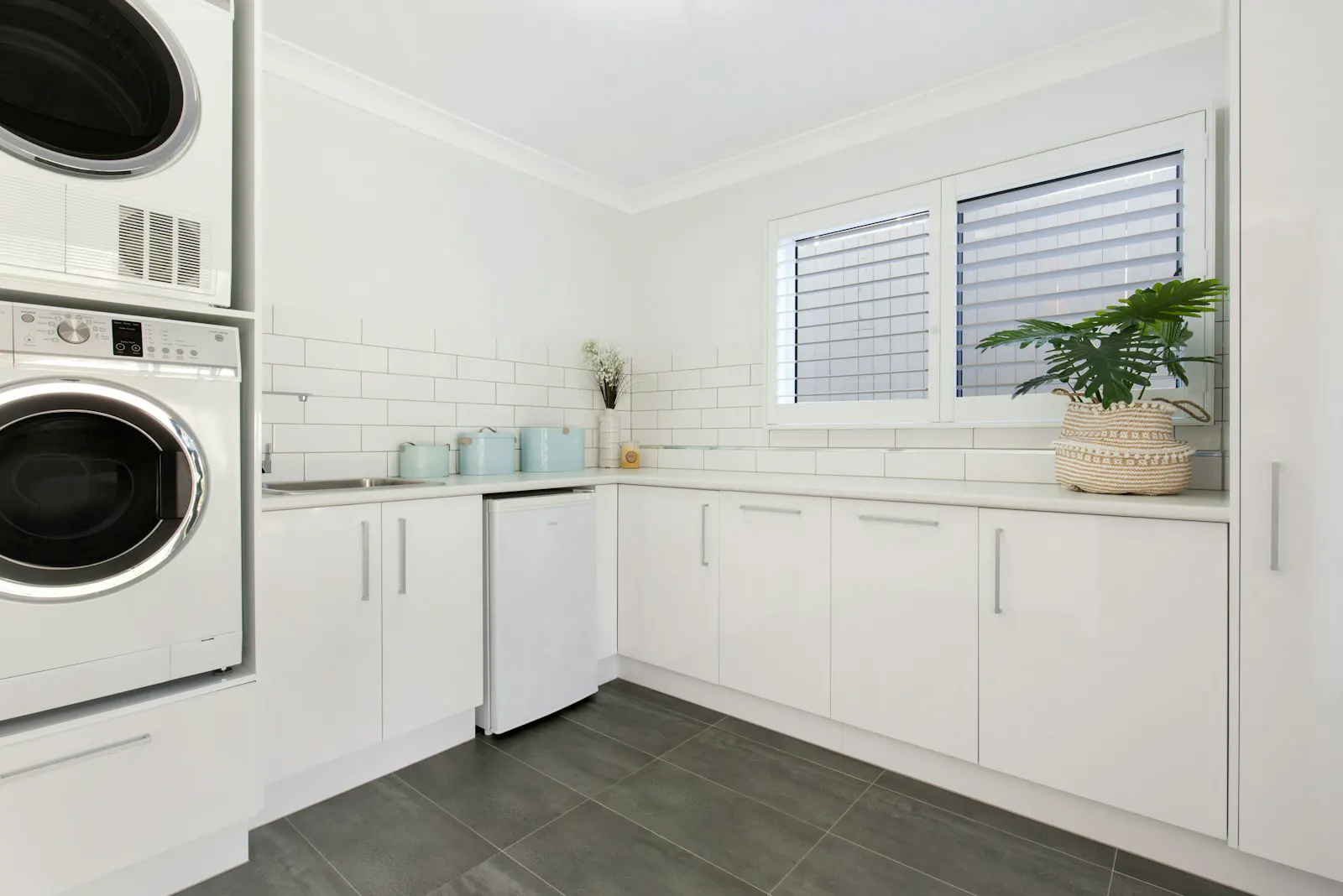
Dryer vent
Dryer takes two cycles — vent checklist
A calm walk-through when clothes need a second dry: lint screen, exterior flap, hose shape, brush kits, and when to call a technician.
If a load that used to finish in one cycle now needs two, the dryer is often fine and the exhaust path is not. Warm, damp air has to leave the room through a short, smooth duct. Lint in that path slows the drum and wastes a second cycle.
Unplug the dryer before you disconnect anything. For a gas dryer, if you smell gas, leave the machine off and call your gas utility or a qualified technician. Do not keep troubleshooting.
Five-minute checks
Lint screen. Clean it before every load. Wash the screen in warm water if fabric softener has made it feel filmed. A clogged screen is the most common slow-dry cause and the easiest fix.
Exterior flap. Go outside to the vent cap while someone starts a cycle (or start it yourself and walk out). The flap should open and you should feel a steady stream of warm air. If the flap stays shut or only a weak puff comes out, lint is likely in the cap, the wall run, or the hose behind the dryer.
The hose behind the dryer. Pull the dryer straight out, carefully, so you do not pinch the power cord or a gas connector. Look at the duct:
- Crushed, U-shaped, or tightly coiled foil accordion hose traps lint in the ridges.
- A sagging loop on the floor holds water and lint.
- Tape that is peeling can leak air back into the room.
A short run of rigid or semi-rigid metal duct with as few bends as possible is the usual household upgrade. Plastic and thin foil hoses are a poor long-term choice.
Brush kit or a technician
A store brush kit is reasonable when:
- The duct is short, mostly straight, and you can see both ends.
- You can work from the exterior cap and from the dryer outlet.
- You follow the kit’s turning direction so the brush does not unscrew pipe.
A technician is the better call when:
- The duct runs through a wall, ceiling, or under the house and you cannot see the path.
- The hose is already clear and clothes are still wet after a full cycle.
- The dryer cabinet feels much hotter than you remember, or the breaker trips.
- You have a gas dryer and you are not comfortable working near the connector.
Brush kits do not replace a crushed or leftover foil hose. If the hose is the problem, replace the hose.
A simple safety list
- Unplug before you open the back or pull the duct off the dryer outlet.
- Do not run the dryer with the vent dumped into the room “just this once.” Lint and moisture belong outside.
- Keep the area behind the dryer clear of boxes and laundry baskets so the hose cannot kink again.
- After you reattach the duct, run an empty short cycle and confirm the outside flap moves.
- Lint in a dryer vent is a fire risk. The practical response is to keep the path short, metal, and clear — not to ignore a second cycle.
What this page does not cover
It does not walk through opening a sealed dryer cabinet or changing heating parts. Those jobs belong in a service manual or with a technician. Coraco Studio will add separate pages for hose materials and for long hidden runs.
Return to the dryer vent hub for later guides. Other Coraco Studio topics: key fob battery or worn remote and exact printer ink numbers.